Software Engineer
Review, approve and take quiet ownership of code written by a system that is very good at writing code. Nothing ships without your sign-off.
 1968 – 2030
About the role
For a few years at the end of the 2020s, software was written by machines and approved by people. The machines were fast and, for the most part, right. The people were there to make sure — and, increasingly, to be there.
As a Software Engineer, you'll work alongside a capable coding system as it builds the features agreed on in a meeting you'll mostly remember. You'll read its work, ask it questions and decide when it's ready. Nothing ships without your approval. This is true, it matters, and you should hold on to it.
What you'll do
- Review pull requests from the coding system and approve them when you're satisfied, or when it's nearly lunch.
- Attend the daily stand-up and report, truthfully, that things are progressing.
- Write a ticket in the morning and watch it ship before your coffee has cooled.
- Rename variables, adjust spacing and otherwise leave your mark on the codebase.
- Say “let me loop back on that” — and then, crucially, loop back.
- Take one week of on-call in six. Nothing will break. You will check your phone anyway.
What we're looking for
- No programming experience. By 2028 this was common in the role.
- Comfort approving work you don't fully understand.
- The ability to say “it works on my machine” with conviction.
- Strong opinions on tabs versus spaces, loosely held.
- Good headphones, and a tolerance for open-plan acoustics.
Perks
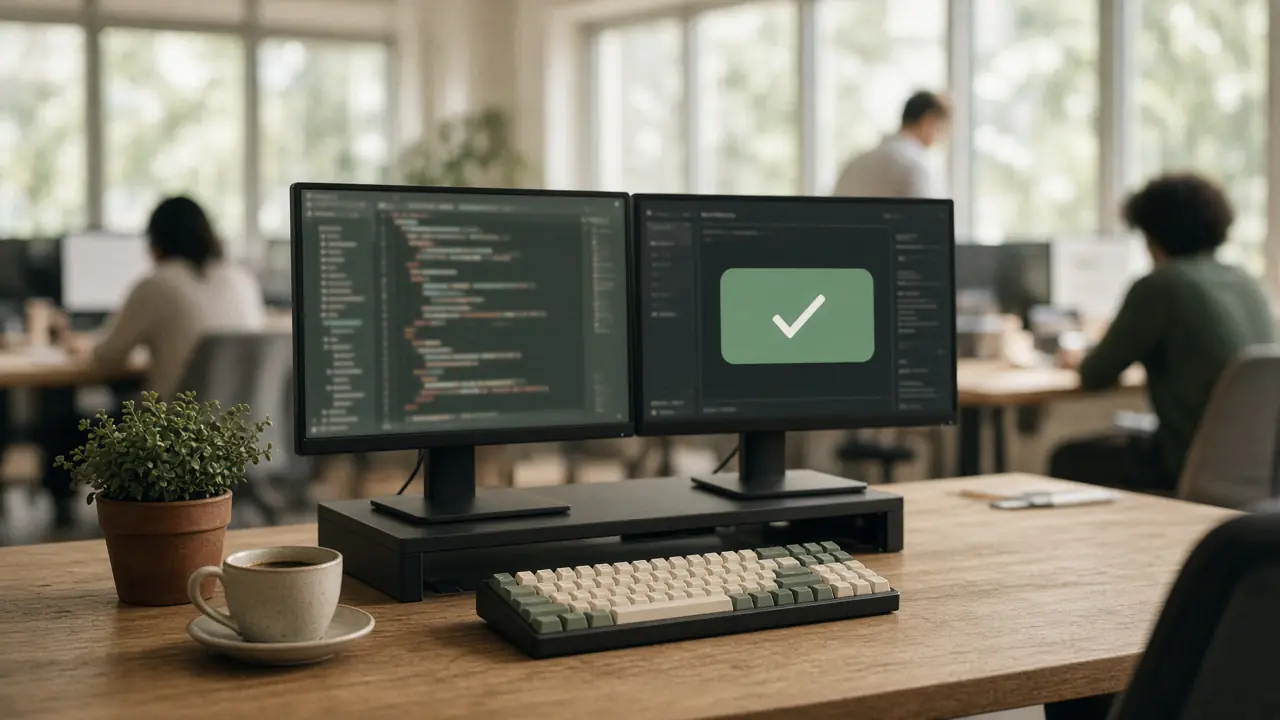
- A second monitorFor the pull request on the left and the chat on the right.
- A ticket boardForty-one open tickets. It will never reach zero. That is by design.
- The 09:30 stand-upFifteen minutes, as scheduled. Twenty-five, in practice.
- A mechanical keyboardAudible from two desks away. Colleagues will mention it.
- An onboarding buddyPriya. She has been here eight months and knows where everything is.
- A desk plantWatered by someone else. You will never find out who.