Power Loom Weaver
Mind four power looms in a Lancashire cotton mill. It's very loud, very fast and very warm. Weavers learned to lip-read. So will you.
 1785 – 1960
About the role
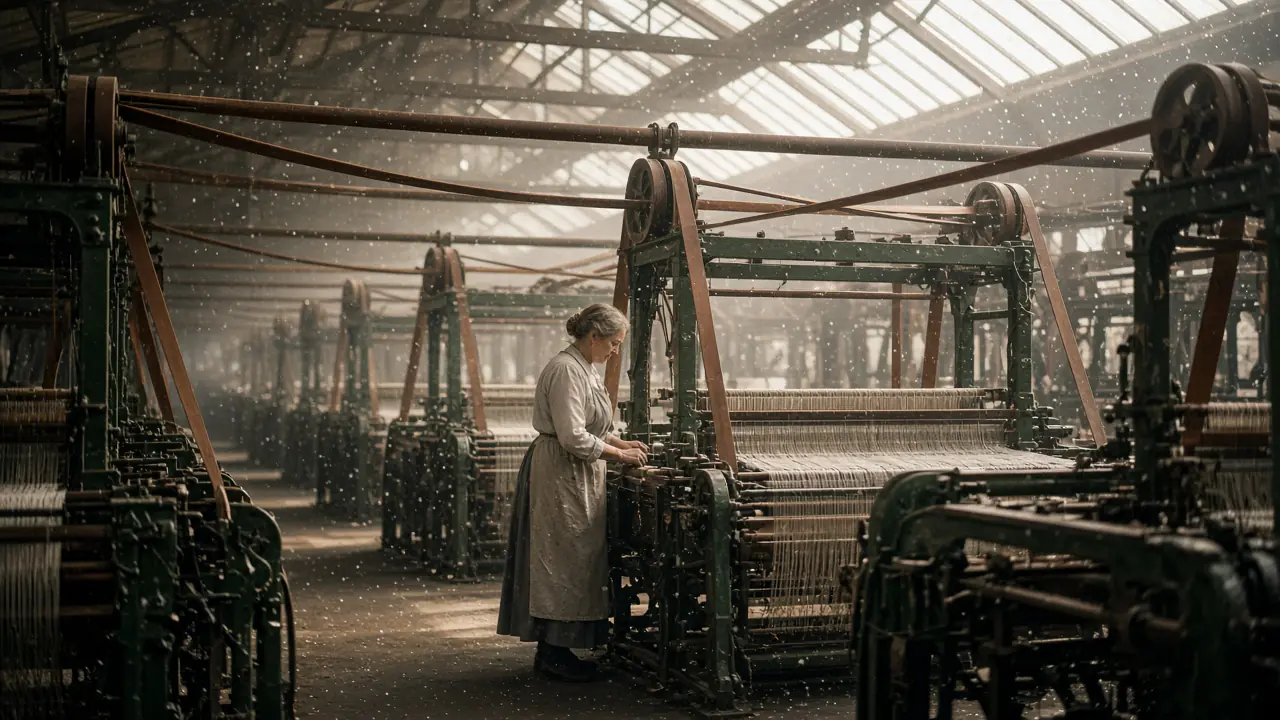
The power loom turned weaving from a craft done at home into a job done in mills, hundreds of looms to a room, all driven by one steam engine. Weavers, many of them women, minded several looms at once, mending broken threads and changing shuttles while everything ran. The noise was so great that they talked by lip-reading, a skill called “mee-mawing”.
At the Queen Street Mill Replica, you'll mind four looms in the weaving shed, alongside members who have been doing it for years. You'll learn to spot a broken thread from across the room, refill a shuttle in seconds and have a whole conversation without making a sound.
What you'll do
- Mind four looms at once, and keep all four running.
- Tie up broken threads before they spoil the cloth.
- Thread each new shuttle without “kissing” it. Weavers used to suck the thread through. Please don't.
- Learn to mee-maw, and use it to talk to the weaver at the next loom.
- Sweep the fluff from under the looms at the end of the shift.
What we're looking for
- Quick hands and sharp eyes.
- Comfort with noise. Earplugs are provided, unlike in 1850.
- Stamina for a full shift on your feet.
- Clogs that fit.
Perks
- A length of clothWoven by you, on your four looms. Enough for a shirt.
- The mill whistleMarks the start, the end and dinner. The only thing you'll hear clearly.
- Mee-mawing lessonsFrom Edith, who has been at the mill for forty years. She'll tell you everything, silently.