Knocker-Upper
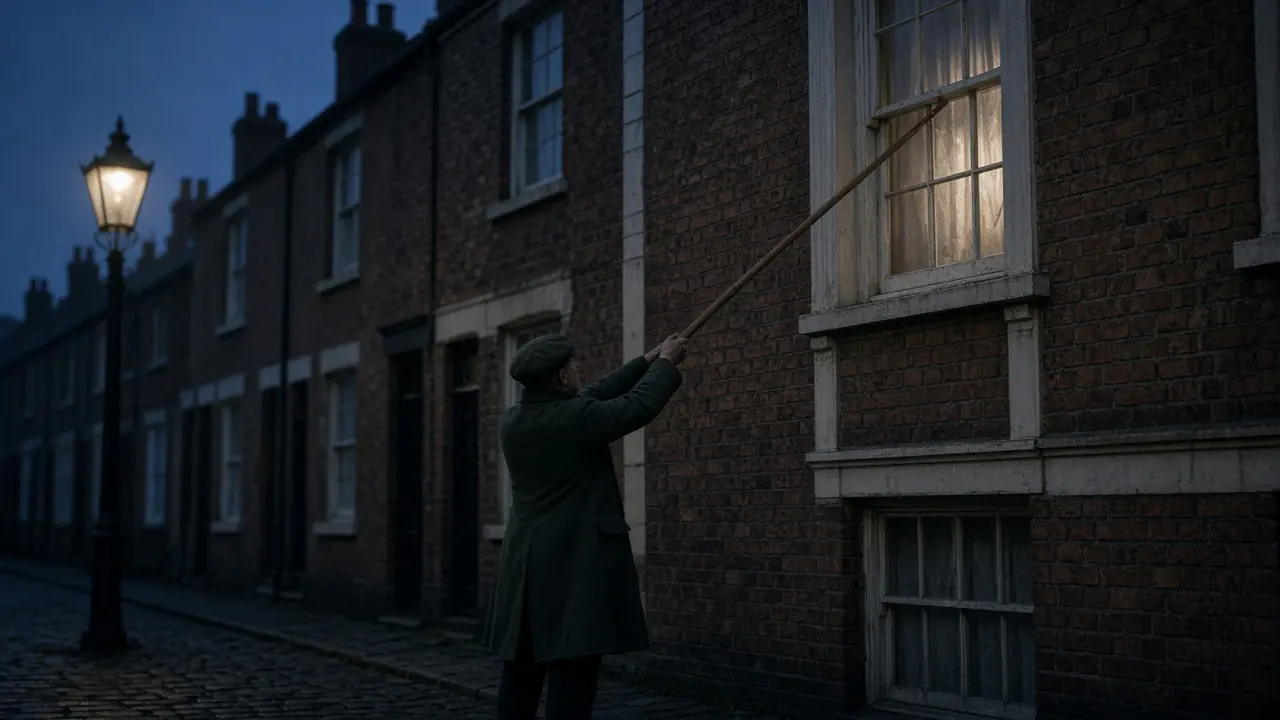
Wake the street before the mill whistle by tapping on bedroom windows with a long pole. You're the alarm clock. Who wakes you is a long-standing question.
 c. 1800 – 1950
About the role
Before alarm clocks were cheap, workers in Britain's mill towns paid someone to wake them. Knocker-uppers walked the streets before dawn, tapping on bedroom windows with a long pole, or firing dried peas at them through a tube, until someone came to the window. It cost a few pence a week.
On Albert Terrace, you'll have a round of thirty houses whose members have paid to be woken at a set time, between 04:30 and 06:00. You'll tap until they wave, and you won't leave until they do. Some will want to be woken twice. One will ask you not to come, and then complain that you didn't.
What you'll do
- Walk your round of thirty houses between 04:30 and 06:00.
- Tap on each window until the resident appears and waves.
- Use the pea-shooter for the third-floor windows.
- Chalk the waking time on each door, so you don't forget.
- Avoid waking the neighbors who haven't paid. They notice.
What we're looking for
- An early riser, naturally or otherwise.
- Good aim with a pea-shooter.
- A light, persistent touch.
- A good memory for windows.
Perks
- A pocket watchThe only one on the street. Everyone depends on it.
- Your roundThirty houses, one route. You'll know it by Wednesday.
- Breakfast at the caféIt opens at six, just as you finish. Bacon sandwich included.